What’s our CIA director doing in Russia? Inquiring minds want to know.
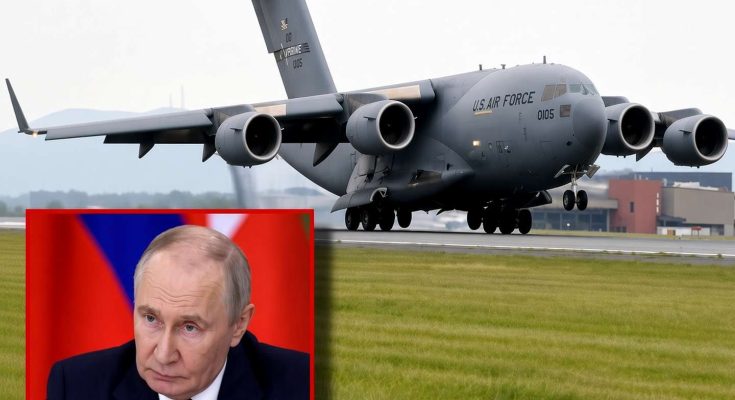
John Ratcliffe made an unannounced trip to Moscow on Tuesday — his first known visit to Russia since taking the job. A U.S. Air Force C-17 Globemaster was spotted at a Moscow airport. A U.S. diplomatic motorcade was photographed moving through the city. Neither Washington nor the Kremlin has said a word about it. Ratcliffe spent approximately four hours in Moscow before departing.
That’s the story. That’s all we have. And in the current environment, that’s actually quite a lot.
The trip comes at a moment of significant tension. U.S. intelligence assessments indicate that Putin’s risk calculus may be shifting — that the Russian leader is potentially increasingly willing to authorize provocative actions against NATO members, including hybrid operations and deniable measures short of conventional military attack, specifically to test the resolve of the alliance and the Trump administration.
The fact that Ratcliffe traveled to Moscow rather than Putin’s representatives traveling to Washington tells you something about the nature of the conversation. You go there when you want to make a point in person, or when the message needs to be delivered face-to-face rather than through back channels. You go there when something is serious enough to justify the optics of the CIA director showing up in the Russian capital.
What was the message? The speculation is broad. Was it about Ukraine, where the U.S. reportedly asked Kyiv to pause strikes while Ratcliffe was on the ground? Was it about Iran, where Russian support for Tehran has complicated the American economic and military pressure campaign? Was it a warning about the intelligence assessments on NATO escalation? A prisoner exchange? A broader diplomatic back-channel?
The silence from both sides is genuine — Kremlin spokesman Dmitry Peskov claimed no meetings with American officials were even scheduled. Of course, Russia would say that. The Kremlin has a documented history of denying things that are actively happening.
Here’s what we can say with confidence. This administration has demonstrated repeatedly that it uses diplomacy and force as tools in the same hand — making military threats credible by following through on them, then offering off-ramps to adversaries who understand the American posture is real. The Iran approach: bombs first, deal on the table simultaneously. The same structure could apply to whatever Ratcliffe was delivering in Moscow.
A CIA director doesn’t fly to Moscow unannounced for a casual conversation. Four hours on the ground is enough to deliver a message and receive a response. The message we don’t know. The fact of its delivery matters.
Trump’s foreign policy has operated on a simple principle from the beginning: peace through strength, not through pleading. The CIA director in Moscow, saying nothing publicly, could be the most powerful message of all.
We’ll learn more when they decide to tell us. Until then, the silence is the story.