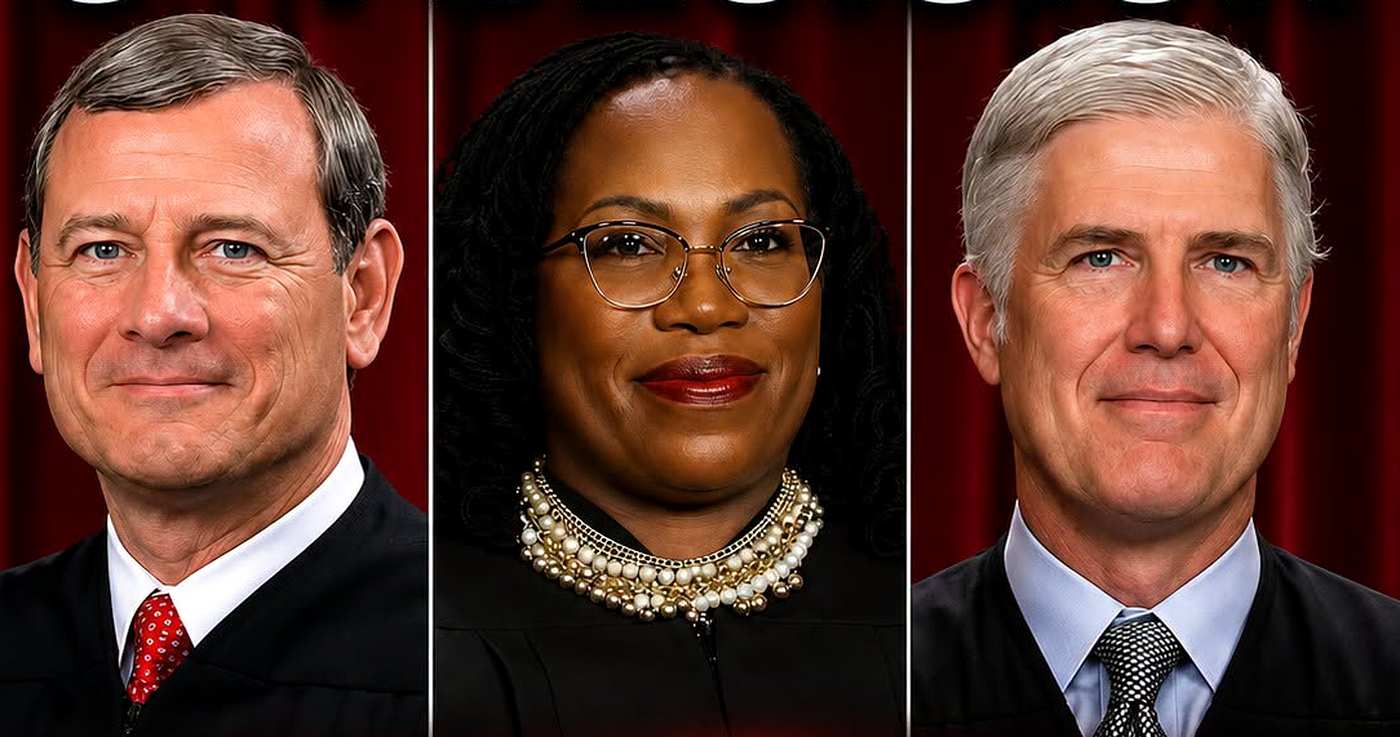
The Supreme Court of the United States handed the Trump administration a legal victory this week by throwing out a federal appeals court ruling that had revived a dispute over public speaking restrictions for immigration judges.
In an unsigned order, the justices reversed a decision of the United
States Court of Appeals for the Fourth Circuit.
They reinstated a lower-court ruling dismissing a lawsuit filed by the National Association of Immigration Judges.
The case centered on a Justice Department policy requiring immigration judges to obtain approval before participating in certain public speaking engagements deemed “official” in nature.
The policy requires immigration judges to obtain approval before participating in “official” speaking engagements, including presentations at immigration conferences or pro bono legal training events.
According to court records, judges are still permitted to give speeches in a personal capacity so long as the topics are not directly connected to immigration matters.
The National Association of Immigration Judges challenged the policy in federal court in Alexandria, arguing it violated the First Amendment by restricting judges from expressing private opinions about immigration policy or the agency employing them.
But U.S. District Judge Leonie Brinkema, a Clinton appointee serving the Eastern District of Virginia, dismissed the lawsuit, pointing to the Civil Service Reform Act.
Brinkema concluded that Congress intended claims like those brought by the judges’ association to be handled through that specialized review system instead of traditional lawsuits in federal court.
The 4th Circuit later revived the lawsuit and sent it back to the district court, raising concerns about whether the review framework created under the Civil Service Reform Act is actually operating the way Congress intended.
The appeals court pointed to two major issues.
First, the Merit Systems Protection Board at one point lacked enough members to function, creating a backlog that critics argued undermined the effectiveness of the system.
Second, the court noted the Trump administration’s constitutional position that the president has the authority to remove members of the MSPB and the Office of Special Counsel at will, a stance that raised broader questions about the independence of the federal employee oversight process.
The administration returned to the Supreme Court, calling the case a “clear
candidate for summary reversal,” arguing the 4th Circuit relied on a theory the parties had not raised.
The high court agreed.
The Supreme Court has delivered two other major wins to Trump in the last week.
Earlier this week, the Supreme Court removed a major legal obstacle that had prevented the Trump administration from moving forward with portions of Trump’s election-related executive order in nearly half the country.
The Supreme Court paused a federal judge’s injunction blocking the Trump administration from implementing provisions of Trump’s March executive order affecting mail-in voting in 23 states and the District of Columbia.
The dispute involves three provisions designed to strengthen citizenship verification and procedures surrounding mail-in ballots.
The first directs the Department of Homeland Security to create lists of adult U.S. citizens in each state and provide them to states at least 60 days before a federal election.
Another directs the attorney general to prioritize investigations and potential prosecutions of state and local officials who issue federal ballots to individuals ineligible to vote.
That’s not all.
Trump also received a last-minute legal reprieve Friday as a looming deadline threatened to halt one of his most closely watched White House projects.
The intervention came from the nation’s highest court and allows the administration to move forward for now while a much larger constitutional dispute remains unresolved.
Chief Justice John Roberts temporarily blocked a lower-court order that would have forced above-ground construction on Trump’s planned White House ballroom to stop by the end of Friday.
The emergency order allows construction to continue while the Supreme Court considers the Trump administration’s request for broader intervention in the case.